 Preset
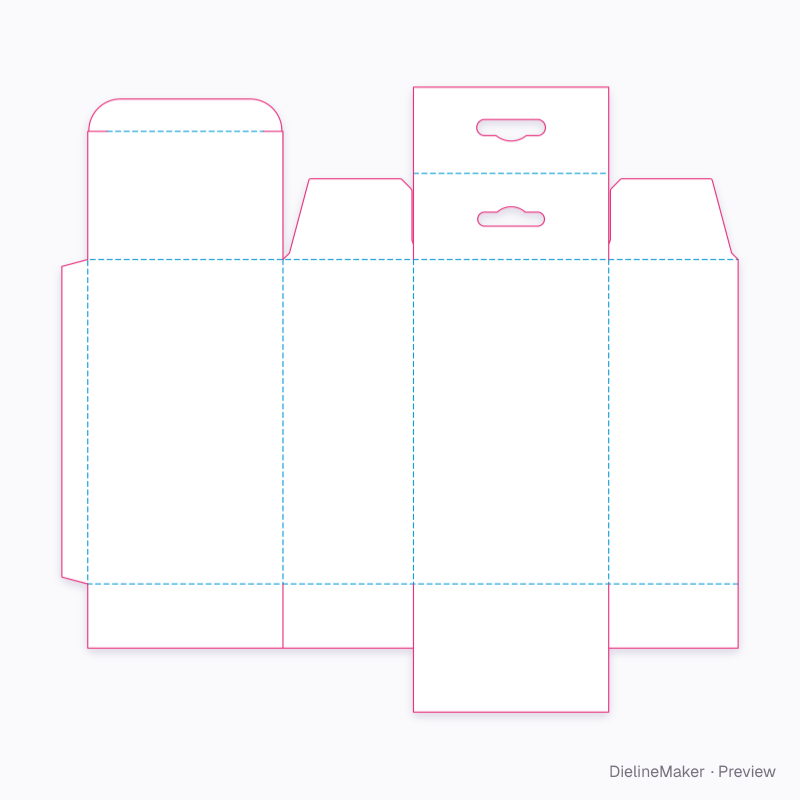
A11.21.03.03 reduced-flap seal base / tuck with extended panel top
ECMA A11.21.03.03
Dieline files on Pro
Start from 950 parametric structures — tuck ends, mailers, trays, pouches, labels and more. Type a length, width and height and every crease, tuck and glue flap moves with it, then download a die-ready file or fold it in 3D first.
1 template in Tuck end for “ecma a11.21.03.03”Retail cartons that close with tucks
PresetECMA A11.21.03.03
Dieline files on Pro
What you get with each of the 6692 templates, in plain words.
Have custom measurements? Try the dieline generator to size a structure, or use the box size calculator to compare inside, outside and score-to-score dimensions.
The flat drawing of a package before it is folded: the outline the steel-rule die cuts, the creases it presses, the glue flaps, and the bleed your artwork runs into. Here cut lines are solid magenta, creases dashed cyan, and the bleed a dotted line 3 mm outside the knife.
A dieline PDF with dimension callouts, a layered SVG for Illustrator or Inkscape, and a DXF for CAD and cutting tables. Cut, crease, bleed and dimensions sit on their own named layers and spot colours, so a printer can separate them from your artwork.
Yes. Every template is parametric: enter inside, outside or score-to-score dimensions and the panels, tucks, dust flaps and glue flap are redrawn for the board's caliper. 35 boards and substrates are built in — folding carton (SBS, FBB, grey-back, kraft, black), corrugated flutes, rigid greyboard with wraps, label stocks, films and PET.
173 of the 950 structures carry a FEFCO (corrugated) or ECMA (folding carton) reference, shown on every card. Structures without a standard code — clamshells, sachets, hang tags — are still fully dimensioned.
Every template opens in a live 3D view that folds the real blank, at your size and on your board. Add artwork to each face in the editor, stage it in a scene, and export a mockup image or turntable video alongside the die files.
Import a DXF or SVG dieline into the 3D Studio — cut and crease lines are read from layer names and colours — and it folds, takes artwork and exports like any template here.