Structural styles
ECMA folding carton codes
Use ECMA drawings to identify folding carton construction, closure and assembly details.
Explore related templates
ECMA codes describe folding carton structures. They help distinguish cartons whose finished appearance is similar but whose end closures or assembly details differ.
The templates below are native structural starting points. Use the exact official ECMA drawing when a purchasing specification requires a particular code and revision.
What to compare in an ECMA drawing
Read the full designation alongside the flat and assembled drawings. Do not assign an ECMA code from a photograph or a familiar product name alone.
| Reference | What it means | Design use |
|---|---|---|
| Body construction | Panel layout and any longitudinal joint. | Confirm glue seam position and print orientation. |
| Top and bottom closures | Tucks, locks or glued closures may differ. | Check filling direction and opening access. |
| Dimensions and assembly | Drawing dimensions and erection information accompany the design. | Agree dimension conventions and manual or machine packing with the converter. |
Prepare the carton specification
Measure the product and any leaflet or insert together. Leave the required loading clearance and account for board caliper at folds.
Confirm grain direction, crease tooling, glue areas and line compatibility on a physical sample. A 3D preview helps review the shape but cannot approve machine performance.
Related editable templates
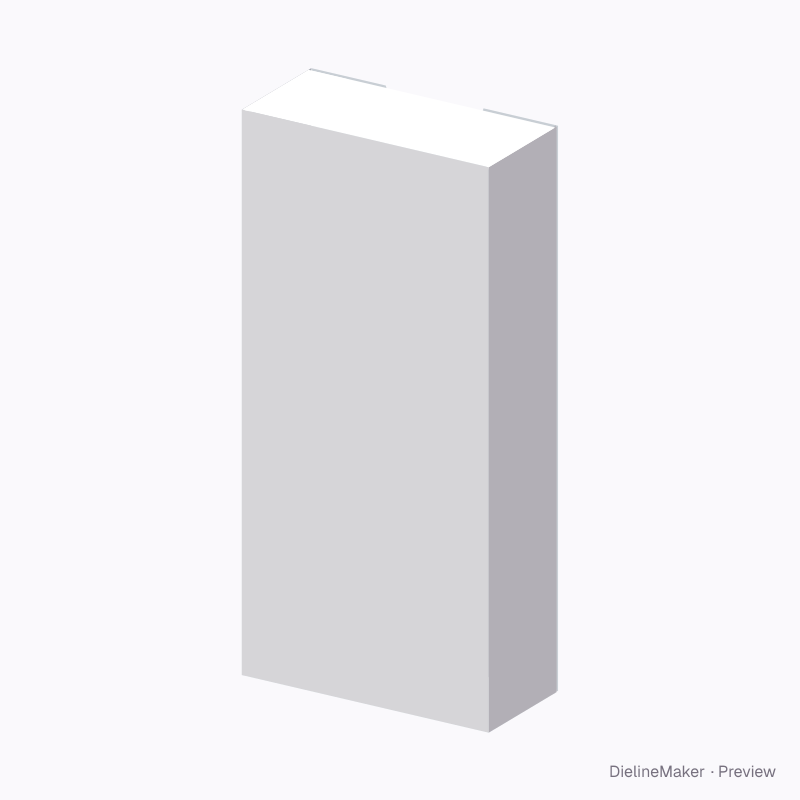
Straight tuck medicine carton
dieline
A structural starting point for a secondary carton; no medicinal-product approval or Braille tooling is included.
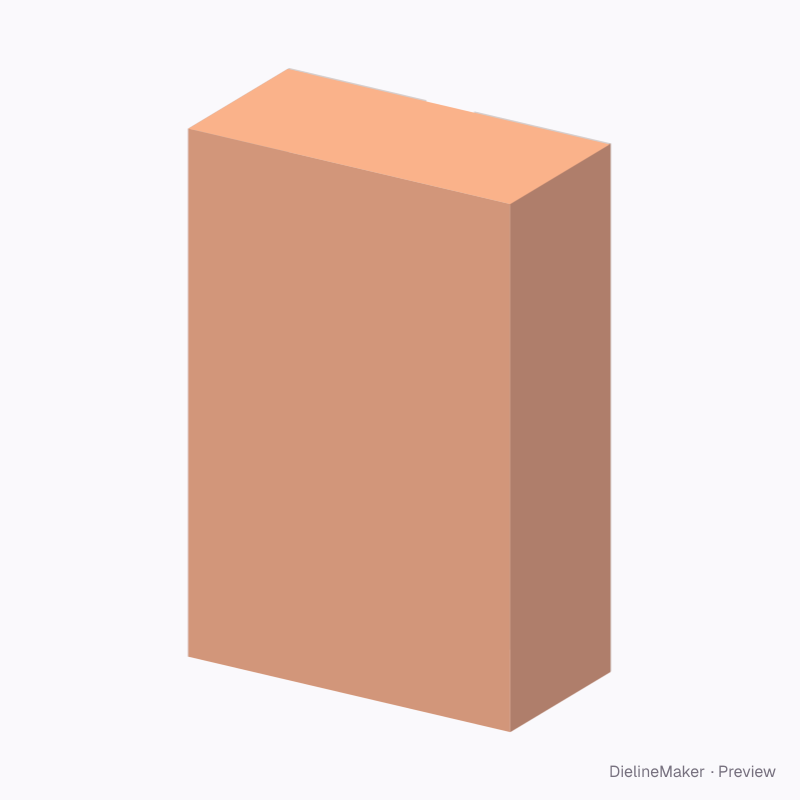
Tear-open tuck carton
dieline
Explore a tear-opening feature; review bridge strength and opening behaviour on samples.
Common questions
Are ECMA and FEFCO interchangeable?
They are distinct design references. ECMA focuses on folding cartons; FEFCO provides the familiar corrugated packaging code system.
Does a tuck carton code guarantee pharmaceutical suitability?
No. Product information, accessibility, security features and production validation require separate specifications.